Nvidia has unveiled GR00T 2, a new open AI model for robots that learns physical skills largely by watching people. It was introduced on November 9 at the Conference on Robot Learning (CoRL) in Austin, Texas.
Learning from people, not just robots
Collecting training data with real robots is slow and expensive. GR00T 2 tries to get around that bottleneck. Nvidia describes it as a “world action model” built on its Cosmos platform: it predicts what a scene will look like next and which robot movements will get it there, learning how actions change the world around it.
Its training mix was dominated by human footage:
- About 402,730 hours of first-person human video
- 10,184 hours of demonstrations recorded with handheld grippers
- 23,500 hours of robot teleoperation data
The model is designed to run on different robot bodies, from simple grippers to dexterous robotic hands and humanoids.
The results
In Nvidia’s tests across 50 tasks the target robot had never practiced, GR00T 2 succeeded about 40% of the time with no extra training. After just five demonstrations per task and a short fine-tuning run, success rose to roughly 95%.
Nvidia is also releasing 100,000 hours of its human video dataset for anyone to use, under a license that permits commercial projects. A smaller “Turbo” version is designed to run directly on a humanoid robot.
Why it matters
If robots can learn from the vast amount of video of humans doing everyday work, training a robot for a new factory or warehouse task could become dramatically faster and cheaper. Results so far come from Nvidia’s own testing, so independent trials will be the real test.
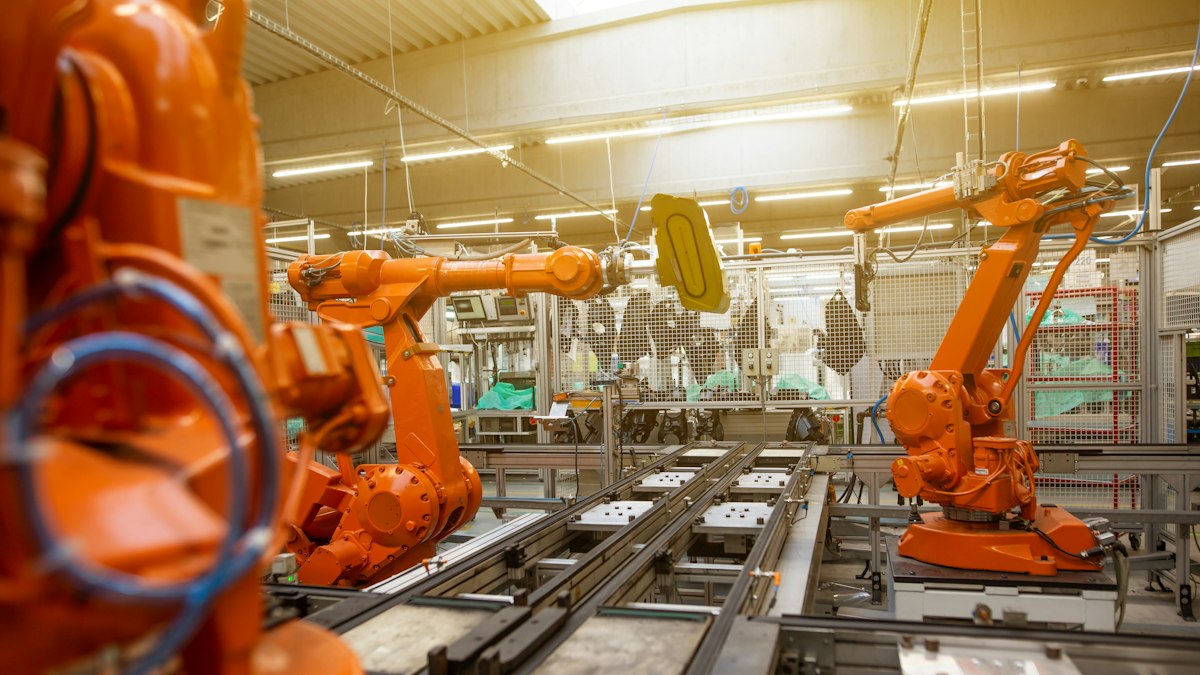
Featured image: Representative photo via Unsplash